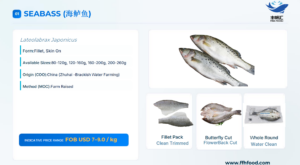
Baijiao Seabass (Lateolabrax japonicus) – Origin from Zhuhai, China
Baijiao Seabass refers to farmed seabass (Lateolabrax japonicus) originating from Baijiao Town, Doumen District, Zhuhai, Guangdong Province, China. This region is located in the Pearl River Delta, where freshwater and seawater mix naturally, forming a typical brackish-water aquaculture environment.
Unlike purely marine or freshwater farming areas, Baijiao benefits from stable estuarine conditions, which support large-scale and continuous seabass aquaculture production.
1. Baijiao, Zhuhai – A Core Seabass Farming Region in China
Baijiao Town is one of the most concentrated seabass farming areas in China.
Key regional characteristics include:
- Located in Pearl River estuary system
- Brackish water aquaculture environment
- Long-standing aquaculture tradition
- Clustered farming ponds and cage systems
- Close connection between farms and processing factories
These conditions make Baijiao an important origin area for China’s farmed seabass supply chain.
2. Aquaculture System in Baijiao
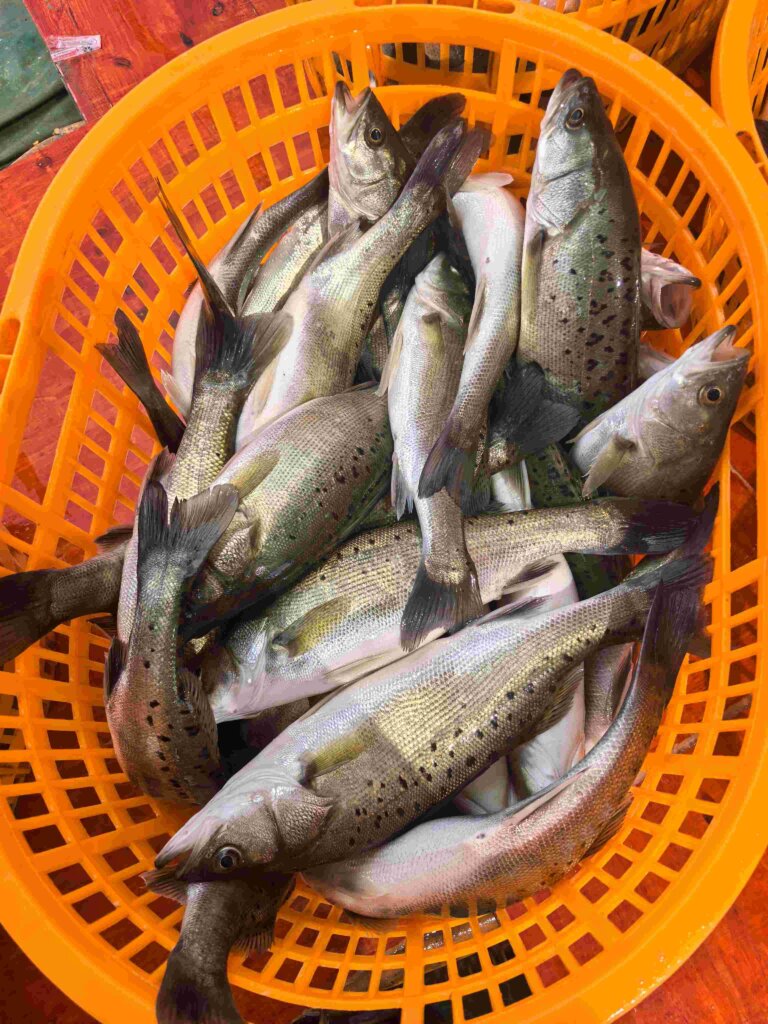
Seabass farming in Baijiao is mainly based on pond aquaculture, supported by some cage culture systems.
Typical features:
- Semi-intensive farming model
- Controlled stocking and feeding management
- Seasonal harvesting cycles
- Stable supply for processing factories
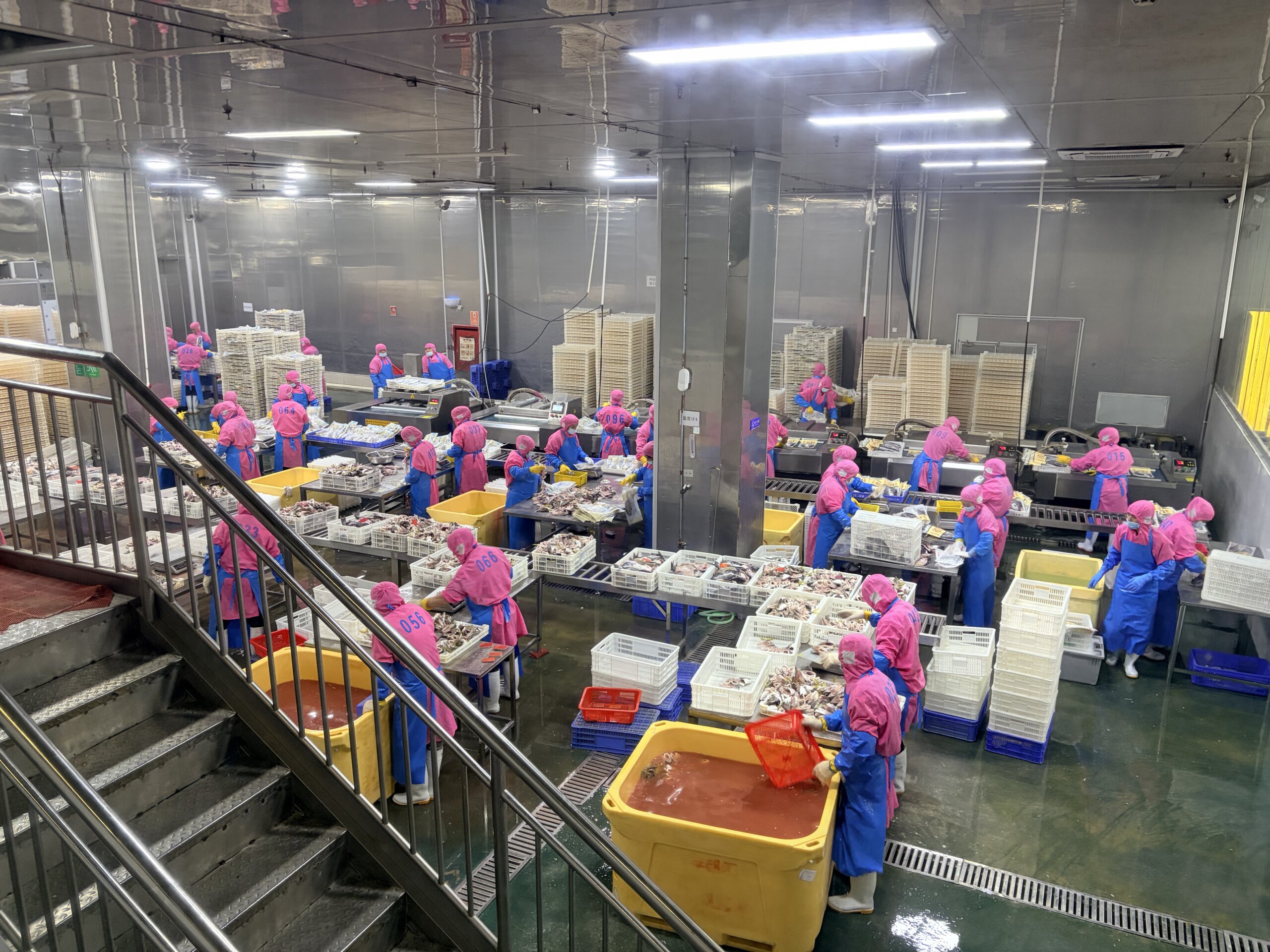
The proximity between farming areas and seafood processing plants in Zhuhai allows short transport time after harvest, which supports frozen processing quality control.
3. Role of Baijiao in China Seabass Supply Chain
Baijiao is part of the broader Zhuhai seabass production cluster, which plays an important role in China’s aquaculture industry.
The region supports:
- Hatchery and juvenile fish supply
- Commercial grow-out farming
- Processing and export industry
- Cold chain logistics integration
This integrated structure helps maintain consistent supply for domestic and international markets.
4. Species Overview – Lateolabrax japonicus
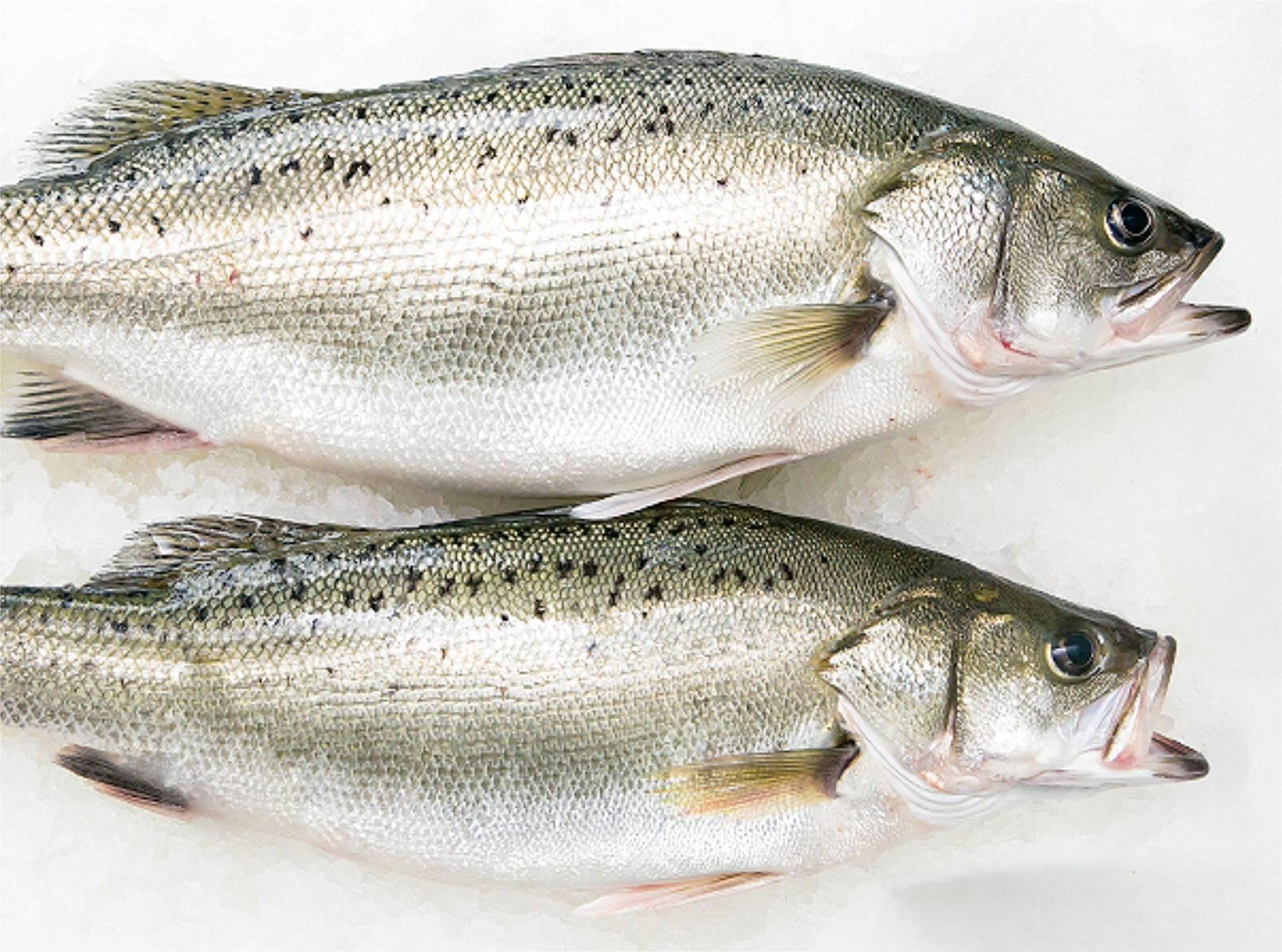
Baijiao seabass belongs to the species Lateolabrax japonicus, commonly known as Asian seabass or Japanese seabass.
Key biological characteristics:
- Adaptable to both freshwater and saltwater environments
- Commonly farmed in brackish water systems
- Suitable for pond and cage aquaculture
- Widely used in global seafood markets
5. Connection to Zhuhai Seafood Processing Industry
Baijiao seabass production is closely linked to Zhuhai’s seafood processing industry.
In this region, seabass is commonly processed into:
- Whole round frozen fish
- Gutted and gilled fish (GGS)
- Boneless fillets (skin-on / skinless)
- Portions and value-added products
The integration of farming and processing supports stable supply for export markets.
6. Industry Importance of Baijiao Seabass
Baijiao has become one of the recognized seabass production bases in China due to:
- Long-term aquaculture development
- Stable production scale
- Established supply chain infrastructure
- Strong connection to export processing facilities in Zhuhai
It is an important origin point within China’s seabass aquaculture system.